Us And Them
How the internet has thrown our imagined communities into disarray. Also this week: some notes on bats; and the man who invented the Tube, sort of.

I’ve not spent enough time in New York City to get comfortable there. I’d like to – it would suit my sense of self – but despite having spent my life in a city that tells itself it plays in the same league, on my handful of trips to NYC I’ve always felt conscious of being somewhere big and important and very slightly alien.
So it was striking, the Friday after election day 2016 – following a fortnight in places like Ohio and Pennsylvania, talking to people who approved of Donald Trump – that as we drove into Brooklyn, I felt an instinctive, subconscious, almost autonomic sense of coming home. Brooklyn was not home. Brooklyn was not somewhere I had ever previously felt at home in my life. And yet there it was: on some level my body was telling me I was back from behind enemy lines.
I’ve been thinking about that this week because of my latest New Statesman column, on the “conservative” commentators who’ve somehow convinced themselves that the patriotic choice is to line up with a foreign government against not merely their own but the will of the British people, too. So lost in the weeds of left/right politics have these guys become that they’ve somehow convinced themselves that Keir Starmer’s reluctance to join Donald Trump’s war on Iran is a mark of weakness – rather than, say, an entirely rational response to a policy which will cause economic and diplomatic chaos with no clear goal in mind.
That column is an example of a subgenre I secretly think of as “look at these pricks”, where the pointing and laughing is kind of the point. And obviously, a British journalist trying to get Donald Trump to attack their own government for clicks is the sort of thing that could be described as “treasonous”, if you were minded to believe in such things.
And yet, if I’m being brutally honest with myself, I can see how those who did it get there. Did those of us on the other side of the fence not cheer when Barack Obama said that Brexit was a bloody stupid idea? Sure, that wasn’t a war – but it was still a situation in which those of us who cared had a sense of us and them, and the border between the two bore little relation to the more literal borders of our own actual nation.
This is something that happens quite a lot. I had a sense of which side is mine when looking at footage of ICE protests in Minnesota, or negotiations about the future of Ukraine, or – one for the oldies here – the protests in Cairo’s Tahrir Square. Even more than Brooklyn, back in 2016, it’s ridiculous to imagine that any of those places I’ve never visited or the people within them are in any sense mine. But I’d bet a not inconsiderable sum of money that it’s an instinct you recognise in yourself.
The impulse to become invested and take sides is not merely normal: it’s one elevated by being the sort of person prone to arguing about such things on the internet. People who’ve worked together crack jokes about “being in the trenches together” because a shared enemy – a boss, a rival political party, or (in politics as in retail or hospitality) the general public – is a bonding experience. That’s true, too, when the battles take place entirely online.1 We define our “us” in opposition to “them”.
The nationalist movements of the mid-19th century were the product of the way the railways, and the first mass media they allowed, created a new sense of “us” that could stand in opposition to the “them” in uniforms in Moscow or Vienna or Istanbul. Newspapers did not merely give voice to existing identities: they also helped create and shape the things.
The internet is doing the same, at record speed; but the resulting identities have ceased to be dependent on geography. I don’t know what the geopolitical ramifications of all this will be. But I suspect we’ll be spending the next few decades finding out.
My opinions – live!
Portsmouth, I am coming on Tuesday 24 March as a special guest of the Royal Geographical Society, to talk to you about borders.
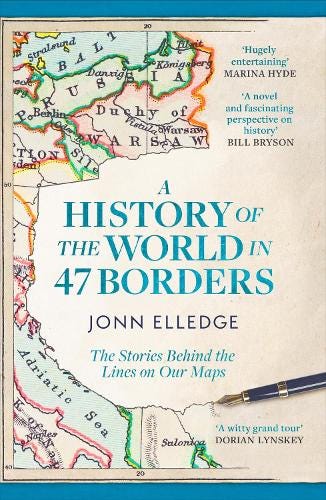
No idea what I’m going to say yet. Why not come along and find out?
I’ll also be in Milton Keynes on Friday 24th April. More to follow.
The most eminent Victorian I’d never heard of
If I were to ask you to recount the most influential figures of Victorian Britain, who’d be on the list? You might, especially if reading from Westminster, gravitate towards the politicians: Palmerston, Gladstone, Disraeli. More likely, you’d go straight to cultural figures, like Dickens or Elliot; industrial ones like Bazalgette, Brunel or Stephenson; scientists like Darwin or Faraday. You might even, if you’re going to be a dick about this, say Queen Victoria.
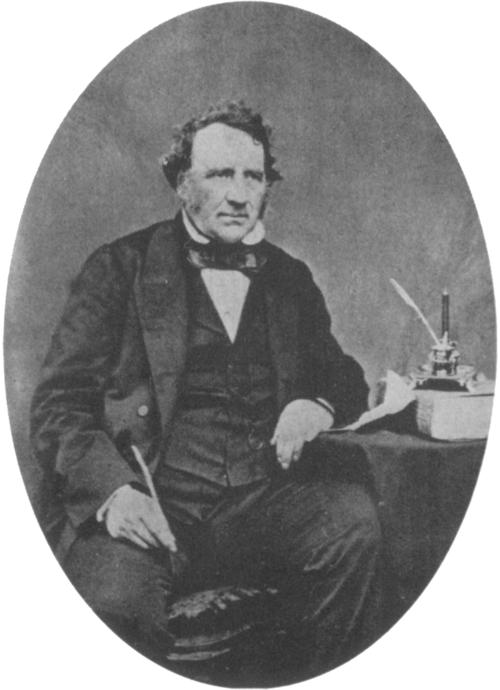
Someone I don’t imagine would make the list is Charles Pearson. Despite having thought about his legacy professionally for some years, and recreationally for about as long as I can remember, until reading up on him for the new book this week it would have been hit and miss whether I’d have managed to remember his name. I certainly couldn’t have picked him out of a line up.
The reason I should really have known about him before, though, is because of the nearly 20 years he spent campaigning for an underground railway. The Tube was obviously not the work of one man; but if the entire concept of an underground railway has a progenitor, it’s this guy.