Fun with papal numbering
Two thousand years of literally just losing count.

Two weeks ago, I used this space to inflict upon subscribers a list of disputed English monarchs: men and women who had good reason to think their names would one day appear in the official lists which provide the spine of English history but who, for one reason or another, do not.
That list, though, is a relatively straightforward affair. There’s some fuzziness about whether “King of the anglo-saxons” is really the same as “King of England”, whether the first on the list should be Alfred or Athelstan, and so on; but nobody seriously gives Matilda, Henry the Young King or Lady Jane Grey the same status as, say, Edward V. (You can make an argument that we should, but that’s a different thing.) It’s basically clear who the official narrative of history has discounted.
Not every monarchy is so clear cut, however. The Roman Empire in its time had breakaway empires and rival claimants and ultimately split: the line between those who count and those who don’t is much harder to pin down. Augustus was clearly emperor, even though he spent essentially his entire career pretending that he wasn’t. But should ill-fated co-rulers like Marcus Aurelius’ brother Lucius Verus count? Or those who briefly held sizable blocks of territory, but who history has decided are usurpers? Or all of the two dozen men who briefly ruled bits of empire during the half-century of chaos known as the Crisis of the Third Century? (Don’t worry, I’ll almost certainly be coming back to this theme at some point. You lucky, lucky people.)
My personal favourite, though, because it’s so funny, is the papacy. That’s officially considered to have been in existence for somewhere between 1990 and 1993 years – it doesn’t deem itself to have existed within Jesus’ lifetime, and there’s some fuzziness about the date when that ended – but either way, such a long history presents a number of problems for maintaining a coherent and universally agreed upon list.
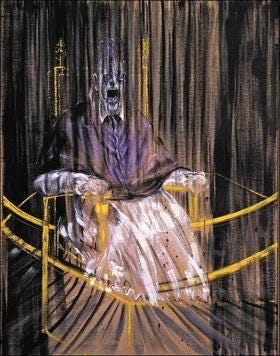
One issue is that between 1990 and 1993 years is, objectively speaking, an extremely long time, and even if that period didn’t include at least half a dozen events known to history as “the Sack of Rome” then the forms that records are kept in literally decay. You’re dependent on copies of copies: errors inevitably creep in.
Another issue is that, for its first couple of centuries, the papacy was less “powerful temporal institution, in which man in big hat sits on throne of gold”, as we think of it now, than “persecuted underground Jewish cult”. That, too, raises questions about record keeping, at least until Constantinte’s Edict of Milan in the year 313 legalised the whole thing. It raises suspicion that the names, dates and achievements of the first 30 or so popes on the list are rooted in things like tradition and legend as much as proper historical record.
The third problem is that the papacy, too, has a long tradition of schisms and rival claimants, often involving a nice little holiday in Avignon. This means that a bunch of popes were later slapped with the label “antipope”: a catch-all term which basically just means “pope we no longer actually count as a pope”.1
This tradition goes back an extremely long way: the first antipope, entertainingly, was St Hippolytus of Rome, who:
a) may have led a schismatic group as a rival bishop of Rome at the end of the 2nd century, quite a while before the church had even finished its “persecuted underground cult” phase, and
b) was later beatified for his important theological work, and is thus the only man in history to be both an antipope and a saint.
He seems to have abandoned his claim in his own lifetime (if he ever made one; it was eighteen and a quarter centuries ago, who the hell knows). Others did not. And while some antipopes were labelled as such in their own times, with others it was only after their deaths. With some, it was a long, long time afterwards.
This is where things get really fun. Because who counts as an anti-pope has changed over time, that means that some well-established regnal numbers have been decreed, after many centuries of acceptance, to be incorrect. Throw in those copy-paste errors, too, and the Annuario Pontifico – the Papacy’s yearbook, which in between names and contact information for every cardinal also includes the official lists of pope – ends up littered with stuff like this:
Pope Martin I (649–655) is followed by Martin IV (1281–1285), with Popes Martin II and III conspicuous by their absence. Why? Because the Latin Martinus looks a lot like Marinus, so for six or more centuries Marinus I and II were mistakenly listed as Martinus II and III.
In the same vein:
There’s no Pope Alexander V. Because the man numbered as such reigned during the western schism of the 14th-15th century (the bit where there was a rival pope at Avignon). He was only slapped with the label antipope in 1963, though, by which time there’d been three other Alexanders, numbered VI to VIII; so everyone decided it was too much hassle to reset the numbering.
Other times, though, they do reset the numbering, thus:
There are two different Stephens II, III, IV, V, VI, VII, VIII and IX. That’s because the first Pope Stephen II, elected in March 752, also died in March 752. Another cardinal was swiftly elected, and reigned as Pope Stephen III – but in 1961, some twelve centuries and seven Pope Stephens later, the Vatican rethought some canon law and decided you only got to say you were pope from the moment of your consecration. So Pope Stephen II was posthumously demoted to Pope-elect Stephen, while Popes Stephen III through X were all bumped down a number.
All of which means that any Pope Stephen-related documents you happen to come across use entirely different numbering schemes, depending on when they were actually written.
Put like that, the “just skipping some numbers when you decide that they’re antipopes” plan starts to make some kind of sense.
Mind you, the fact that the 4th century Felix II and 15th century Felix V were both later declared antipopes means that there have been five pope Felixes, only three of whom were actually pope. A fact I enjoy very much.
Ditto the fact that Pope Donus II, who spent centuries popping up on lists as an extremely short-lived pope in 974, never actually existed. What had actually happened is that some, presumably short-sighted, clerk had misread the description of Pope Benedict VI (973-4) as “dominus” (lord). What on earth did they imagine was happening in Rome in 973-4 that they were getting through popes at that rate?
Most nightmarish of all, though, is the numbering of the Pope Johns. There’s a John XIVb or XIV bis, an entirely non-existent Pope added to the lists around 984 by medieval historians who’d managed to misread a book of papal biographies (how they imagined an entire pope is beyond me). There’s Pope John XX, who didn’t exist either: it’s just that, when choosing his own regnal name, Pope John XXI (1276-7) literally lost count and gave himself a number one higher than required. There’s John XVI (997-8), who remains in the numbering sequence despite later being considered an antipope; then there’s the first Pope John XXIII (1410-15), considered legitimate all the way up to the mid 20th century, when the second Pope John XXIII arrived and antipope-d him, claiming there had been “twenty-two Johns of indisputable legitimacy”. How he reached this conclusion given everything else in this paragraph, I have absolutely no idea, but then again, I’m not the pope.
In 1870 – somewhere between 1840 and 1837 years after the beginnings of the papacy; nearly 17 centuries after the first antipope – Pope Pius IX declared the doctrine of papal infallibility.
I would say that I have some questions.
The Gratuitous Dog Picture & Sales Pitch Bit

The article above is an extract from the archive of the Newsletter of (Not Quite) Everything, a weekly newsletter which goes out every Wednesday at 4pm. Become a paying subscriber, and each week you’ll get a bit on politics, some diverting links, an article on history/geography/language/something, and the map of the week. But that’s not all! You’ll also get a warm glow of satisfaction that you’re helping me to write fun and interesting things, not nasty corporate ones. And all for just £4 a month or £40£28 a year! Ah, go on, go on, go on.
But: we’re all broke right now. If you can’t currently justify paying for some nerd’s substack (unemployed, underemployed, impoverished student, and so forth), just hit reply and ask nicely and I’ll give you a complimentary subscription, no questions asked.

Alternatively, why not pre-order my new book, out next April? Go on, the more this thing sells, the more free newsletters I can dole out.
Having seen too much TV scifi at a formative age, I can never quite shake the ahistorical idea that if an antipope ever touched a pope there'd be an enormous explosion.